
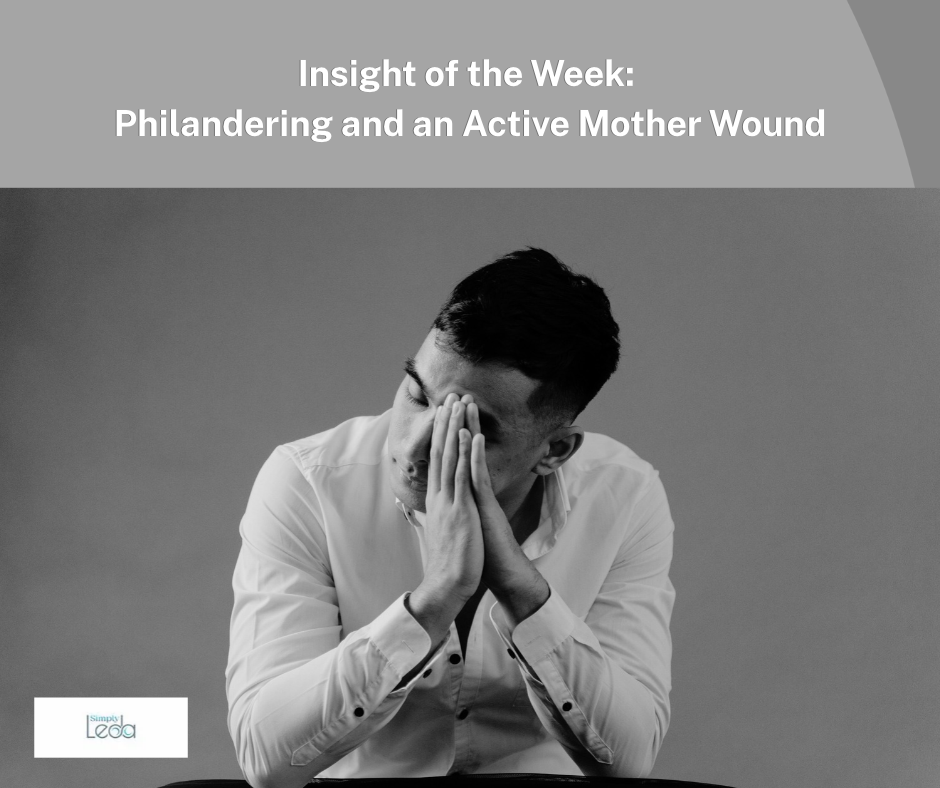

When we talk about an active Mother Wound and its effects on the child, the areas that come up specifically are abandonment, rejection, and attachment issues. Unhealed these drive unconscious relational dynamics and compulsive behaviors in our adult relationships, especially our romantic ones. One of these is the psychological link to infidelity; philandering and serial philandering.
When the mother fails to provide unconditional love, emotional safety and validation the child will seek out romantic partners, as an adult, to fill that void. It is the search for the “perfect mother.” As such, the adult will continually jump to new partners chasing the honeymoon phase of relationships wherein they will receive the “high” of absolute validation. This, however, is a two-edged sword because no romantic partner can fulfill what should have been given in infancy/childhood and it is not their responsibility to do so. When this high fades and the relationship requires true intimacy, this adult disengages out of fear of rejection or abandonment. They avoid vulnerability so they are not hurt “again” as they were by their mother. Consequently, they seek out only superficial relationships, often with multiple partners. They remain emotionally detached and disconnected as a result. In this avoidant attachment style, we see the adult alternating between a deep longing for genuine love and affection and sudden emotional detachment.
Additionally, if healthy self-worth was not reflected in childhood, this adult will look for constant external validation through the thrill, chase or conquest of a new partner as this serves to fuel their deep-seated inadequacy. This can become an addiction.
As adults, we seek to re-create our childhood wounds in our adult relationships in an attempt to “fix” or “heal” them. Ultimately, due to patterning we unconsciously self-sabotage and pick the person who will give us the same type of relationship that feels “safe and familiar” to us as defined by our mothers.
The key to healing is to understand the wound and its origin in its totality and to take accountability as an adult to actively do the inner work to heal the trauma instead of self-medicating through others. This requires practicing and embodying the five components of self-love. For in essence, you are learning how to love yourself into healing and liberation.
Simply Leda | All Rights Reserved